New Orleans, LA · Founded 2026 · Rare Disease Modeling · Powered by Stem Cells

Neurons from
baby teeth.

PulpNeuro uses dental pulp stem cells (DPSC) to build patient-specific neuronal models of rare neurogenetic diseases — faster, cheaper, and more scalable than iPSC approaches.

213+ Patient Cell Lines
15 Rare Disease Genotypes
6–7 Weeks to Neurons
11 Peer-Reviewed Publications
The Problem

Rare neurogenetic diseases need better models

Induced pluripotent stem cells (iPSC) have been the gold standard for patient-derived neuron models — but they require viral reprogramming, take 60–84 days to produce neurons, and cost $1,500+ per vial. For rare diseases affecting thousands of children, that timeline and cost is prohibitive.

Dental pulp stem cells (DPSC) are a fundamentally better starting material for neurogenetic disease modeling. They're neural crest-derived, epigenetically closer to embryonic stem cells than iPSCs, and they differentiate directly into functional neurons in 6–7 weeks — no viral reprogramming required.

See the platform →
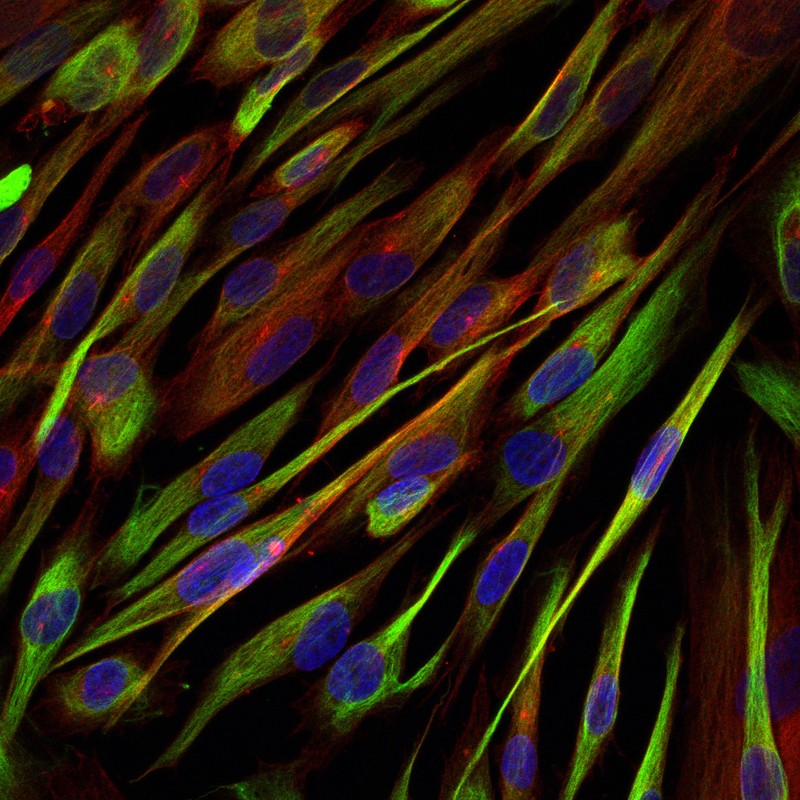
DPSC stem cells under fluorescence microscopy
DPSC stem cells (TH / Beta-tubulin / DAPI). Reiter Lab, Tulane University.
Our Approach

A complete neurogenetic disease platform

DPSC Neuronal Differentiation

Our validated 3-step protocol converts DPSC into functional cortical-like neurons in 6–7 weeks. No reprogramming required. Multiple biological replicates per genotype.

Brain Organoids & MEA

DPSC-derived brain organoids measured by multielectrode array (MEA) provide real-time seizure and firing rate readouts in 3D patient-specific tissue models.

Therapeutic Screening

Platform-ready for ASO validation, small molecule and natural product screening, and CRISPR-Cas9 gene correction — all in patient-matched neuronal backgrounds.

Focus Areas

Chromosome 15 imprinting disorders & beyond

PulpNeuro's cell library spans 15 rare neurogenetic syndromes, with deep expertise in chromosome 15q imprinting disorders — currently a focus of ASO therapeutics by several companies.

View all 15 disease areas →
Precision Medicine

Every patient's neurons are unique.
So is our approach.

Because DPSC come directly from a child's shed tooth, we can generate neurons from any individual with any rare variant — then test therapies in their neuronal background. ASO efficacy, CRISPR correction efficiency, seizure pharmacology tuned to receptor polymorphisms: all validated in the patient's own cells.

Our precision medicine approach
Science

Field-defining publications since 2015

2025
Circadian rhythm defects in Prader-Willi syndrome neurons
Victor AK et al. · HGG Advances
PubMed ↗
2023
Linoleic acid improves PIEZO2 dysfunction in a mouse model of Angelman Syndrome
Romero LO et al. · Nature Communications
PubMed ↗
2017
Dental pulp stem cells for the study of neurogenetic disorders
Victor AK, Reiter LT · Human Molecular Genetics · Foundational review
PubMed ↗
All 11 publications →